Spain's Daily Lunch Price Hits 14.70 Euros
Rising costs and shifting consumer habits are squeezing the traditional set menu, which now commands a near 15 euro price tag.
By Andre Williams ·
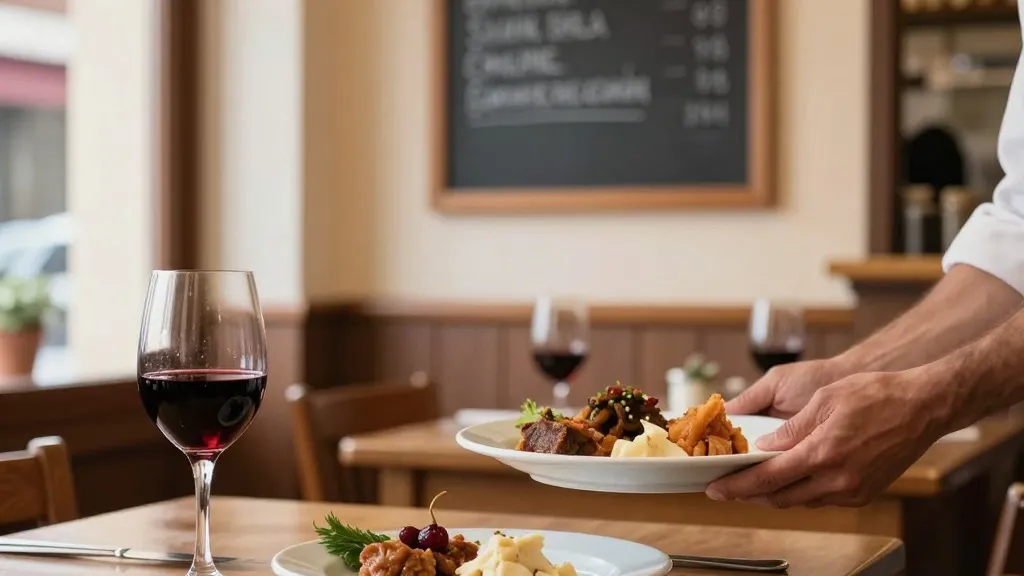
The average price of Spain's traditional daily set lunch has climbed to 14.70 euros, signaling a significant shift in the value proposition of the country's most common midday meal. This increase reflects broader economic pressures on the food service sector, as operators struggle to balance rising input costs with consumer expectations for affordability.
The menú del día remains a staple of Spanish dining, with approximately four million such meals served on any given working day. However, the format is facing erosion from changing consumer behaviors and economic headwinds. The traditional structure, which includes a starter, a main course, a dessert, bread, and a drink, is being challenged by time-poor diners who prefer quick alternatives like packed lunches or ready-made supermarket options.
The origins of the daily menu are deeply rooted in mid-century state policy. Introduced in the mid-1960s by Manuel Fraga, the information and tourism minister under Francisco Franco's regime, the menu was designed to project an image of plenty and affordability to foreign visitors following the post-civil war famine. Regulations at the time fixed prices between 50 and 250 pesetas and mandated specific food standards, including a quarter-litre of pure Spanish red or white wine with at least 12% alcohol content. The goal was to ensure that tourists saw Spain as a land of good, cheap food.
In the early 1970s, the offer was renamed to distance it from its tourist-focused origins and to encourage domestic consumption. Today, the menu is so ubiquitous that its political origins are largely forgotten. Lakshmi Aguirre, a Spanish food journalist and author of a new book on the topic, noted that many people are surprised to learn about Fraga's role. She described the menu as a reflection of Spanish society's evolution, noting that nostalgia for the format is growing as it becomes less common.
Small, family-run restaurants are feeling the squeeze from rising energy and food costs. To maintain margins, some establishments have simplified their offerings to a single dish of the day. Others are adapting to Spain's changing demographics by incorporating Latin American staples into their daily rotation. Aguirre argues that the menu has always mirrored the society that consumes it, and these changes are a natural part of that evolution rather than a sign of decline.
Ferran Adrià, the country's most renowned chef, famously declared the daily menu dead in 2009. He blamed the shift on economic downturns and the rise of bistro-style restaurants charging 20 to 30 euros for similar fare. Seventeen years later, that verdict appears premature, as the format continues to serve millions. However, the economic model is under strain, with the current average price of 14.70 euros representing a substantial increase from historical levels.
Aguirre offers a specific set of criteria for identifying a quality venue. She looks for simple dishes, a menu that changes regularly, and fresh ingredients, such as chips that are not frozen. She also values the social atmosphere, noting that a chorus of regulars is a good sign. Her checklist includes a chalkboard menu free of trendy items like avocado, burrata, or sourdough bread. A bonus factor is the presence of the owner's child doing homework at a table in the back, which suggests a family-run operation.
For Aguirre, the economic and social stakes of the menú del día extend beyond the cost of a meal. She describes it as a critical meeting point for society, allowing families with limited means to eat out and providing company for those who live alone. The true value, she argues, lies not only in the affordability of the food but also in the time it allows diners to enjoy their meal, a luxury that is increasingly rare in a fast-paced economy.
The future of the daily set lunch depends on its ability to adapt to higher costs without losing its core identity as an accessible, time-efficient meal. While the format is not yet obsolete, the rising price point and shifting consumer preferences indicate a period of transition. Operators who can balance efficiency with quality, and who can maintain the social function of the lunch hour, are likely to survive this shift in the market.
As the midday meal continues to evolve, the 14.70 euro price tag serves as a benchmark for the changing economics of Spanish dining. The menu remains a vital part of the country's culinary landscape, but its ability to sustain its mass appeal in the face of rising costs will determine whether it remains a daily staple or becomes a niche offering.
Source: The Guardian
More Business · World news · Bad Business · Report a business