Tesla Converts Fremont Legacy to One-Million-Unit Robot Factory
The automaker is repurposing its California plant for high-volume humanoid production, aiming to ramp output to 20,000 units weekly by year-end.
By Anastasia Volkova ·
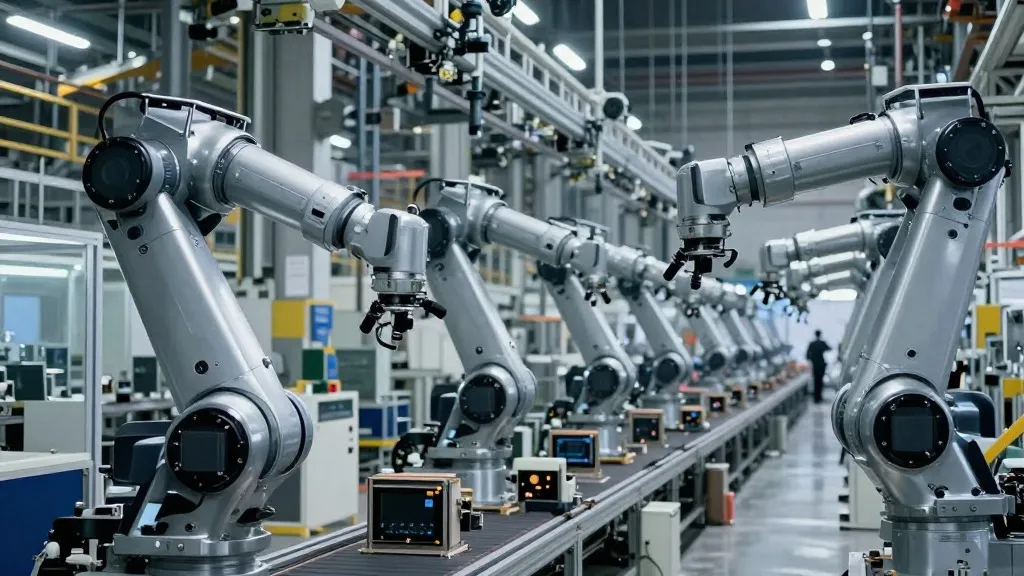
Tesla has officially transitioned its Fremont, California facility from legacy vehicle production to high-volume humanoid manufacturing. The company confirmed that the robots now rolling off the assembly line represent the first units to meet strict production-quality standards. This shift marks a critical milestone, as Tesla asserts that the current manufacturing process is viable for a commercial product, moving the Optimus project from prototype status to scalable industrial output.
The financial and logistical implications of this pivot are substantial. The dedicated line occupies the footprint previously reserved for the Model S and Model X, a space cleared in just 46 days to accommodate a capacity target of one million units annually. On its recent earnings call, CEO Elon Musk stated that the majority of the necessary equipment is already installed in Fremont. As the production curve steepens, the company anticipates output will rise to approximately 20,000 robots per week, a trajectory Musk characterized as a classic S-curve with an initially shallow slope.
A distinct operational challenge for Tesla is the absence of a large existing fleet to generate training data, unlike its automotive division which relies on millions of vehicles. To solve this, the company is deploying an internal “Optimus Academy,” a network of 10,000 to 20,000 robots designed to practice diverse tasks and feed learnings back into the AI model. This closed-loop system ensures that every unit produced contributes to the intelligence of the next, accelerating the refinement of the robot’s electromechanical design and reliability.
Technological upgrades are also accelerating the timeline for external deployment. Tesla plans to integrate its new AI5 chip into the Optimus platform next year, with a demonstration of AI-driven task completion expected within one to two months. Musk criticized rival humanoid demonstrations that rely on preprogrammed scripts, arguing that such routines lack the robustness required for real-world applications. The company aims to complete its current engineering refinements by the end of next year, at which point deliveries to outside enterprises for dangerous and repetitive labor will begin.
The supply chain is aligning with this production scale. In September, Tesla certified Tuopu, Joyson, and Sanhua as mass-production partners for key components. While Fremont handles the initial ramp, a larger dedicated facility is under construction at Giga Texas. Drone imagery indicates the steel frame of this new plant is nearing completion, with a long-term capacity target of 10 million robots annually. Executives noted that Optimus production costs are trending toward the manufacturing baseline of the Cybercab, signaling an engineering strategy focused on volume efficiency from the outset. The most significant technical hurdle remains the dexterity of the robot’s hands, which continues to absorb the majority of current engineering resources.
The stakes for Tesla are high, as the success of Optimus hinges on translating automotive manufacturing discipline into a new hardware category. By leveraging existing infrastructure and a data-driven training model, the company is attempting to compress the time between prototype and mass market. If the ramp-up proceeds as planned, the Fremont line will serve as the proof of concept for a global humanoid ecosystem, with the Giga Texas plant positioned to handle the next phase of exponential growth.
Source: Teslarati