Massive protests disrupt France as crisis deepens
Massive protests across France highlight growing social and political unrest as Macron faces challenges in his final months in office.
By Natalia Campos ·
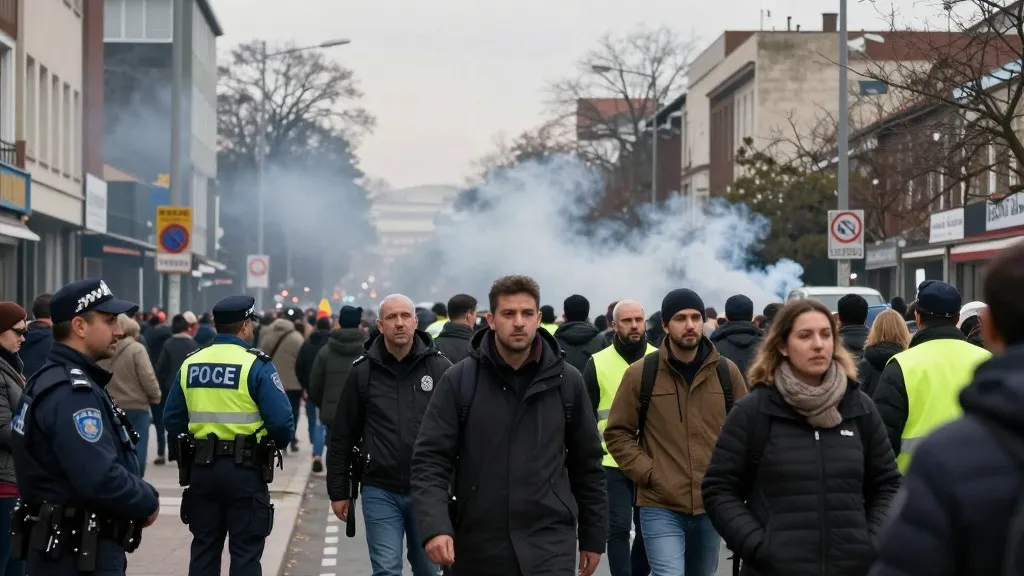
A massive nationwide protest gripped France on Saturday as hundreds of thousands of people marched in cities across the country. The demonstrations, largely peaceful, were driven by schoolchildren demanding more teachers and repairs to crumbling school buildings. President Emmanuel Macron faces mounting social and political challenges as he enters his final months in office.
In Paris, at least 110,000 people marched along the eastern edge of the city, according to government estimates. Participants backed high school students but also voiced anger over the high cost of living and what they described as heavy-handed policing. Riot officers had been sent to target school protesters over the past month instead of the government offering political solutions.
Tensions flared at the end of the Paris route, at Porte de Vincennes on the city's eastern edge, where groups of masked men dressed in black who did not appear to have taken part in the peaceful march threw glass bottles and stones at police. Officers responded with teargas, water cannon and stun grenades, while a bin was set alight and fireworks were set off towards police. Teargas was also fired to keep protesters from reaching city centres in Lyon, Lille, Montpellier, Nantes and Toulouse, and bin fires were lit amid clashes in Marseille.
The government estimated that at least 400,000 people marched nationwide, while trade unions put the figure at double that. More than 70,000 police officers were deployed, with shops boarded up and many museums closed. The government had feared a repeat of the previous Saturday, when, despite peaceful protests, France saw one of its most violent days of unrest in years, with public buildings burned, hundreds of shops destroyed and looted, and at least 2,700 people arrested.
The crisis began in mid-September, when students aged 15 to 18 started protesting against staff shortages, leaking and crumbling buildings, and a lack of chairs in overcrowded classrooms. It has grown into the biggest youth movement in years, with trade unions, teachers and parents joining. Police investigations are under way after some children and protesters were maimed and injured by explosive police weaponry.
Source: The Guardian